
Don't overlook your roofing; it's not only critical for protection but also plays a significant role in your home's appearance. Porch renovation Learn more about Residential Kitchen Renovation Surrey here They've mastered the art of overseeing every detail, guaranteeing that your project stays on track, within budget, and meets all your specifications. With Canyon Property Projects Ltd., your home improvement project is in hands that truly understand the value of tailoring everything to suit your individual needs and tastes. Understanding the complexities of home improvement, Canyon Property Projects Ltd. offers comprehensive project management to ensure your project is executed flawlessly from start to finish. Identifying your specific customization needs is the first step in tailoring a Residential Kitchen Renovation Surrey home improvement project that aligns perfectly with your vision and goals.
They've streamlined their processes to avoid common delays, ensuring a smooth and swift completion of your project. For homeowners, how will your needs evolve? Being proactive about this hidden problem can save you from unexpected headaches and expenses down the line. You're not just hiring workers; you're partnering with specialists passionate about craftsmanship and quality.
Whether it's installing low-flow toilets or rainwater harvesting systems, they've got the know-how to help you save water in every corner of your home. Diving into our portfolio, you'll see before-and-after photos that highlight the dramatic transformations we've achieved. This personalized approach to pricing means you won't encounter hidden fees or surprise costs halfway through your project.
This team doesn't just work for you; they collaborate with you, making sure that every aspect of the project meets your standards and surpasses your expectations. You're not just getting a service; you're investing in a masterpiece that's built to last. A home that looks neglected from the outside is harder to sell, regardless of its interior charms. They also specialize in fitting energy-efficient lighting and smart home systems, which not only contribute to reducing energy use but also add convenience to your life.
Beyond completing your home renovation, Canyon Property Projects Ltd. ensures you're fully supported with exceptional aftercare services. Whether it's a minor adjustment you need or just some advice on maintaining your newly upgraded space, they're just a call or email away. If you're happy with the plan, you give the green light, and Canyon Property Projects Ltd takes care of the rest.
At Canyon Property Projects Ltd., your peace of mind is paramount. These success stories are a testament to Canyon Property Projects Ltd's commitment to excellence. You'll find that Canyon Property Projects doesn't cut corners. They're leading the charge in Residential Kitchen Renovation Surrey, transforming homes with an eye toward the future.
Moreover, they're keen on waste reduction during and after construction. In essence, an exterior makeover is a strategic blend of aesthetics and functionality. Modern home renovation Surrey Embarking on your home improvement journey, the design and planning process with Canyon Property Projects Ltd. is meticulously tailored to fit your unique vision and needs.

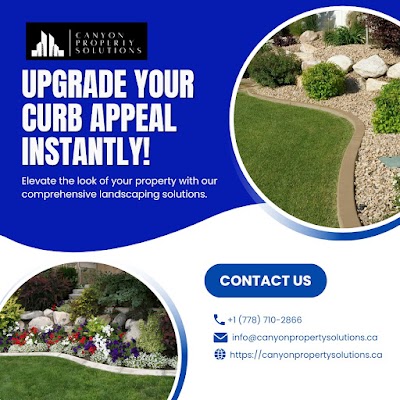
A well-maintained front yard, a freshly painted door, and clean, clear pathways can significantly boost your home's appearance and value. Moreover, incorporating energy-efficient features and smart home technology can further elevate your property's value. Our commitment to timely project completion isn't just about sticking to deadlines. While enhancing your home's market value through strategic upgrades is crucial, it's equally important to manage these projects effectively to ensure their success. Ensuring your complete satisfaction is our top priority at Canyon Property Projects Ltd., where we believe in turning your home improvement dreams into reality with precision and care.
Consider the indulgence of a freestanding soaking tub or the convenience of a smart toilet with touchless flush and self-cleaning features. Firstly, they kick off with a detailed consultation to understand your vision and goals. This means you won't just have a beautiful space but also a practical and reliable one.
Canyon Property Projects Ltd. prioritizes materials that are both sustainable and durable, meaning they'll last longer while reducing waste. It's about making your home not just seen, but remembered. Their commitment to transparency builds trust, ensuring a smooth, stress-free experience. It's not just about the aesthetics; they consider the local climate, materials that thrive in it, and designs that resonate with Residential Kitchen Renovation Surrey's unique charm. You might be dreaming of a modern kitchen makeover, a luxurious bathroom upgrade, or perhaps expanding your living space with a bespoke extension.
They're committed to enhancing your home's functionality and efficiency, incorporating the latest technologies and sustainable materials wherever possible. From solar panels to rainwater harvesting systems, they're making it easier than ever for you to reduce your environmental impact. It's not just about aesthetics; it's about making your home work better for you. Imagine sleek granite countertops that not only dazzle the eye but also withstand the test of time and culinary challenges.
They'll guide you through the selection of water-efficient fixtures and eco-friendly materials that reduce your environmental footprint without compromising on style or comfort. Structural renovation They mentioned the smooth process, from initial consultation to the final walkthrough, emphasizing the team's attention to detail and open communication. Once you've made the initial contact, a team member will schedule a visit to your property. Prioritizing customer satisfaction, Canyon Property Projects Ltd. tailors each project to meet your unique needs and preferences.
So, if you're dreaming of a home that stands out, they're ready to take on the challenge and deliver results that exceed your expectations. They're committed to using only the finest materials, ensuring your bathroom not only looks exquisite but withstands the test of time. With Canyon Property Projects Ltd., you're not just renovating your house; you're customizing your entire living experience. Surrey kitchen and bath renovations They highlighted the team's attention to detail and the smooth communication throughout the project.


Their dedication to craftsmanship is evident in every join, every paint stroke, and every tile laid. Moreover, they're committed to using only the highest quality materials, ensuring durability and longevity for your home improvements. It's like watching your property come back to life, rejuvenated and ready to stand out in Residential Kitchen Renovation Surrey's competitive real estate market. They understand that the backbone of any successful renovation or construction project lies not just in the expertise of their team but also in the quality of materials and tools used. Your vision, budget, and timeline are their top priorities, ensuring a personalized approach to every project, big or small.
This approach means they're committed to transparency throughout the process, keeping you informed and involved every step of the way. Moreover, our commitment to sustainability means we're always looking for eco-friendly materials and energy-efficient solutions that benefit both you and the planet. Canyon Property ensures seamless project management from start to finish, keeping disruptions to your daily life to a minimum. You, as a realtor or property owner in Residential Kitchen Renovation Surrey, understand the significance of customization in today's dynamic real estate market.
They understand that home improvement is a significant investment, and they're committed to delivering exceptional results that exceed your expectations.
Canyon Property doesn't just excel in technical execution; they understand the importance of listening to their clients. You've likely witnessed the surge in home improvement projects, but what sets Canyon Property apart is their tailored approach to renovation and design. That's why they take a personalized approach from the get-go, ensuring your vision is at the forefront of every decision. Imagine installing solar panels to cut down on electricity costs or incorporating rainwater harvesting systems to reduce your water bill and impact on the environment.
In essence, these testimonials paint a vivid picture of a company that's genuinely invested in turning their clients' visions into reality, making home improvement dreams come true with skill, creativity, and a personal touch.


| |
| Names | |
|---|---|
| Other names
polybutene-1, poly(1-butene), PB-1
| |
| Identifiers | |
| ChemSpider |
|
| ECHA InfoCard | 100.111.056 |
CompTox Dashboard (EPA)
|
|
| Properties | |
| (C4H8)n | |
| Density | 0.95 g/cm3[1] |
| Melting point | 135 °C (275 °F; 408 K)[1] |
| Related compounds | |
Related compounds
|
1-butene (monomer) |
Except where otherwise noted, data are given for materials in their standard state (at 25 °C [77 °F], 100 kPa).
| |
Polybutylene (polybutene-1, poly(1-butene), PB-1) is a polyolefin or saturated polymer with the chemical formula (CH2CH(Et))n. Not be confused with polybutene, PB-1 is mainly used in piping.[2]
Polybutylene is produced by polymerisation of 1-butene using supported Ziegler–Natta catalysts.
Isotactic PB-1 is produced commercially using two types of heterogeneous Ziegler–Natta catalysts.[3] The first type of catalyst contains two components, a solid pre-catalyst, the δ-crystalline form of TiCl3, and solution of an organoaluminum cocatalyst, such as Al(C2H5)3. The second type of pre-catalyst is supported. The active ingredient in the catalyst is TiCl4 and the support is microcrystalline MgCl2. These catalysts also contain special modifiers, organic compounds belonging to the classes of esters or ethers. The pre-catalysts are activated by combinations of organoaluminum compounds and other types of organic or organometallic modifiers. Two most important technological advantages of the supported catalysts are high productivity and a high fraction of the crystalline isotactic polymer they produce at 70–80 °C under standard polymerization conditions.[4][5][6]
PB-1 is a high molecular weight, linear, isotactic, and semi-crystalline polymer. PB-1 combines typical characteristics of conventional polyolefins with certain properties of technical polymers.
PB-1, when applied as a pure or reinforced resin, can replace materials like metal, rubber and engineering polymers. It is also used synergistically as a blend element to modify the characteristics of other polyolefins like polypropylene and polyethylene. Because of its specific properties it is mainly used in pressure piping, flexible packaging, water heaters, compounding and hot melt adhesives.
Heated up to 190 °C and above, PB-1 can easily be compression moulded, injection moulded, blown to hollow parts, extruded, and welded. It does not tend to crack due to stress.[dubious – discuss] Because of its crystalline structure and high molecular weight, PB-1 has good resistance to hydrostatic pressure, showing very low creep even at elevated temperatures.[7] It is flexible, resists impact well and has good elastic recovery.[3][8]
Isotactic polybutylene crystallizes in three different forms. Crystallization from solution yields form-III with the melting point of 106.5 °C. Cooling from the melt results in the form II which has melting point of 124 °C and density of 0.89 g/cm3. At room temperature, it spontaneously converts into the form-I with the melting point of 135 °C and density of 0.95 g/cm3.[1]
PB-1 generally resists chemicals such as detergents, oils, fats, acids, bases, alcohol, ketones, aliphatic hydrocarbons and hot polar solutions (including water).[3] It shows lower resistance to aromatic and chlorinated hydrocarbons as well as oxidising acids than other polymers such as polysulfone and polyamide 6/6.[7] Additional features include excellent wet abrasion resistance, easy melt flowability (shear thinning), and good dispersion of fillers. It is compatible with polypropylene, ethylene propylene rubbers, and thermoplastic elastomers.
Some properties:[7]
The main use of PB-1 is in flexible pressure piping systems for hot and cold drinking water distribution, pre-insulated district heating networks and surface heating and cooling systems. ISO 15876 defines the performance requirements of PB-1 piping systems.[9] PB-1's most notable characteristics are weldability, temperature resistance, flexibility and high hydrostatic pressure resistance. The material can be classified PB 125 with a minimum required strength (MRS) of 12.5 MPa. Other features include low noise transmission, low linear thermal expansion, no corrosion and calcification.
PB-1 piping systems are no longer being sold in North America (see "Class action lawsuits and removal from building code approved usage", below). The overall market share in Europe and Asia is rather small but PB-1 piping systems have shown a steady growth in recent years. In certain domestic markets, e.g. Kuwait, the United Kingdom, Korea and Spain, PB-1 piping systems have a strong position.[8]
Several PB-1 grades are commercially available for various applications and conversion technologies (blown film, cast film, extrusion coating). There are two main fields of application:
PB-1 is compatible with a wide range of tackifier resins. It offers high cohesive and adhesive strength and helps tailoring the "open time" of the adhesive (up to 30 minutes) because of its slow crystallisation kinetics. It improves the thermal stability and the viscosity of the adhesive.[10]
PB-1 accepts very high filler loadings in excess of 70%. In combination with its low melting point it can be employed in halogen-free flame retardant composites or as masterbatch carrier for thermo-sensitive pigments. PB-1 disperses easily in other polyolefins, and at low concentration, acts as processing aid reducing torque and/or increasing throughput.
PB-1 can be foamed.[11] The use of PB-1 foam as thermal insulation is of great advantage for district heating pipes, since the number of materials in the sandwich structure is reduced to one, facilitating its recycling.[12]
Other applications include domestic water heaters, electrical insulation, compression packaging, wire and cable, shoe soles, and polyolefin modification (thermal bonding, enhancing softness and flexibility of rigid compounds, increasing temperature resistance and compression set of soft compounds).
Plumbing and heating systems made from PB-1 have been used in Europe and Asia for more than 30 years. First reference projects in district heating and floor heating systems in Germany and Austria from the early 1970s are still in operation today.[8]
One example is the installation of PB-1 pipes in the Vienna Geothermal Project (1974) where aggressive geothermal water is distributed at a service temperature of 54 °C and 10 bar pressure. Other pipe materials in the same installation failed or corroded and had been replaced in the meantime.[8]
International standards set minimum performance requirements for pipes made from PB-1 used in hot water applications. Standardized extrapolation methods predict lifetimes in excess of 50 years at 70 °C and 10 bar.[8]
Polybutylene plumbing was used in several million homes built in the United States from around 1978 to 1997. Problems with leaks and broken pipes led to a class action lawsuit, Cox v. Shell Oil, that was settled for $1 billion.[13][14] The leaks were associated with degradation of polybutylene exposed to chlorinated water.[15]
Polybutylene water pipes are no longer accepted by the United States building codes and have been the subject[16] of class action lawsuits in both Canada and the U.S.[17][18] The National Plumbing Code of Canada 1995 listed polybutylene piping as acceptable for use with the exception of recirculation plumbing. The piping was removed from the acceptable for use list in the 2005 issue of the standard.[19]
In Australia in March 2023, the Department of Mines, Industry Regulation and Safety reported that Australian homes built in 2019-2020 that had used a certain brand of polybutylene piping, had become the subject of an enquiry due to the significance of water leaks reported.[20][21]
There is evidence to suggest that the presence of chlorine and chloramine compounds in municipal water (often deliberately added to retard bacterial growth) will cause deterioration of the internal chemical structure of polybutylene piping and the associated acetal fittings.[22] The reaction with chlorinated water appears to be greatly accelerated by tensile stress, and is most often observed in material under highest mechanical stress such as at fittings, sharp bends, and kinks. Localized stress whitening of the material generally accompanies and precedes decomposition of the polymer. In extreme cases, this stress-activated chemical "corrosion" can lead to perforation and leakage within a few years, but it also may not fail for decades. Fittings with a soft compression seal can give adequate service life.[further explanation needed]
Because the chemical reaction of the water with the pipe occurs inside the pipe, it is often difficult to assess the extent of deterioration. The problem can cause both slow leaks and pipe bursting without any previous warning indication. The only long-term solution is to completely replace the polybutylene plumbing throughout the entire building.[23]
| Authority control databases: National |
|---|
|
| |
| Names | |
|---|---|
| Other names
polybutene-1, poly(1-butene), PB-1
| |
| Identifiers | |
| ChemSpider |
|
| ECHA InfoCard | 100.111.056 |
CompTox Dashboard (EPA)
|
|
| Properties | |
| (C4H8)n | |
| Density | 0.95 g/cm3[1] |
| Melting point | 135 °C (275 °F; 408 K)[1] |
| Related compounds | |
Related compounds
|
1-butene (monomer) |
Except where otherwise noted, data are given for materials in their standard state (at 25 °C [77 °F], 100 kPa).
| |
Polybutylene (polybutene-1, poly(1-butene), PB-1) is a polyolefin or saturated polymer with the chemical formula (CH2CH(Et))n. Not be confused with polybutene, PB-1 is mainly used in piping.[2]
Polybutylene is produced by polymerisation of 1-butene using supported Ziegler–Natta catalysts.
Isotactic PB-1 is produced commercially using two types of heterogeneous Ziegler–Natta catalysts.[3] The first type of catalyst contains two components, a solid pre-catalyst, the δ-crystalline form of TiCl3, and solution of an organoaluminum cocatalyst, such as Al(C2H5)3. The second type of pre-catalyst is supported. The active ingredient in the catalyst is TiCl4 and the support is microcrystalline MgCl2. These catalysts also contain special modifiers, organic compounds belonging to the classes of esters or ethers. The pre-catalysts are activated by combinations of organoaluminum compounds and other types of organic or organometallic modifiers. Two most important technological advantages of the supported catalysts are high productivity and a high fraction of the crystalline isotactic polymer they produce at 70–80 °C under standard polymerization conditions.[4][5][6]
PB-1 is a high molecular weight, linear, isotactic, and semi-crystalline polymer. PB-1 combines typical characteristics of conventional polyolefins with certain properties of technical polymers.
PB-1, when applied as a pure or reinforced resin, can replace materials like metal, rubber and engineering polymers. It is also used synergistically as a blend element to modify the characteristics of other polyolefins like polypropylene and polyethylene. Because of its specific properties it is mainly used in pressure piping, flexible packaging, water heaters, compounding and hot melt adhesives.
Heated up to 190 °C and above, PB-1 can easily be compression moulded, injection moulded, blown to hollow parts, extruded, and welded. It does not tend to crack due to stress.[dubious – discuss] Because of its crystalline structure and high molecular weight, PB-1 has good resistance to hydrostatic pressure, showing very low creep even at elevated temperatures.[7] It is flexible, resists impact well and has good elastic recovery.[3][8]
Isotactic polybutylene crystallizes in three different forms. Crystallization from solution yields form-III with the melting point of 106.5 °C. Cooling from the melt results in the form II which has melting point of 124 °C and density of 0.89 g/cm3. At room temperature, it spontaneously converts into the form-I with the melting point of 135 °C and density of 0.95 g/cm3.[1]
PB-1 generally resists chemicals such as detergents, oils, fats, acids, bases, alcohol, ketones, aliphatic hydrocarbons and hot polar solutions (including water).[3] It shows lower resistance to aromatic and chlorinated hydrocarbons as well as oxidising acids than other polymers such as polysulfone and polyamide 6/6.[7] Additional features include excellent wet abrasion resistance, easy melt flowability (shear thinning), and good dispersion of fillers. It is compatible with polypropylene, ethylene propylene rubbers, and thermoplastic elastomers.
Some properties:[7]
The main use of PB-1 is in flexible pressure piping systems for hot and cold drinking water distribution, pre-insulated district heating networks and surface heating and cooling systems. ISO 15876 defines the performance requirements of PB-1 piping systems.[9] PB-1's most notable characteristics are weldability, temperature resistance, flexibility and high hydrostatic pressure resistance. The material can be classified PB 125 with a minimum required strength (MRS) of 12.5 MPa. Other features include low noise transmission, low linear thermal expansion, no corrosion and calcification.
PB-1 piping systems are no longer being sold in North America (see "Class action lawsuits and removal from building code approved usage", below). The overall market share in Europe and Asia is rather small but PB-1 piping systems have shown a steady growth in recent years. In certain domestic markets, e.g. Kuwait, the United Kingdom, Korea and Spain, PB-1 piping systems have a strong position.[8]
Several PB-1 grades are commercially available for various applications and conversion technologies (blown film, cast film, extrusion coating). There are two main fields of application:
PB-1 is compatible with a wide range of tackifier resins. It offers high cohesive and adhesive strength and helps tailoring the "open time" of the adhesive (up to 30 minutes) because of its slow crystallisation kinetics. It improves the thermal stability and the viscosity of the adhesive.[10]
PB-1 accepts very high filler loadings in excess of 70%. In combination with its low melting point it can be employed in halogen-free flame retardant composites or as masterbatch carrier for thermo-sensitive pigments. PB-1 disperses easily in other polyolefins, and at low concentration, acts as processing aid reducing torque and/or increasing throughput.
PB-1 can be foamed.[11] The use of PB-1 foam as thermal insulation is of great advantage for district heating pipes, since the number of materials in the sandwich structure is reduced to one, facilitating its recycling.[12]
Other applications include domestic water heaters, electrical insulation, compression packaging, wire and cable, shoe soles, and polyolefin modification (thermal bonding, enhancing softness and flexibility of rigid compounds, increasing temperature resistance and compression set of soft compounds).
Plumbing and heating systems made from PB-1 have been used in Europe and Asia for more than 30 years. First reference projects in district heating and floor heating systems in Germany and Austria from the early 1970s are still in operation today.[8]
One example is the installation of PB-1 pipes in the Vienna Geothermal Project (1974) where aggressive geothermal water is distributed at a service temperature of 54 °C and 10 bar pressure. Other pipe materials in the same installation failed or corroded and had been replaced in the meantime.[8]
International standards set minimum performance requirements for pipes made from PB-1 used in hot water applications. Standardized extrapolation methods predict lifetimes in excess of 50 years at 70 °C and 10 bar.[8]
Polybutylene plumbing was used in several million homes built in the United States from around 1978 to 1997. Problems with leaks and broken pipes led to a class action lawsuit, Cox v. Shell Oil, that was settled for $1 billion.[13][14] The leaks were associated with degradation of polybutylene exposed to chlorinated water.[15]
Polybutylene water pipes are no longer accepted by the United States building codes and have been the subject[16] of class action lawsuits in both Canada and the U.S.[17][18] The National Plumbing Code of Canada 1995 listed polybutylene piping as acceptable for use with the exception of recirculation plumbing. The piping was removed from the acceptable for use list in the 2005 issue of the standard.[19]
In Australia in March 2023, the Department of Mines, Industry Regulation and Safety reported that Australian homes built in 2019-2020 that had used a certain brand of polybutylene piping, had become the subject of an enquiry due to the significance of water leaks reported.[20][21]
There is evidence to suggest that the presence of chlorine and chloramine compounds in municipal water (often deliberately added to retard bacterial growth) will cause deterioration of the internal chemical structure of polybutylene piping and the associated acetal fittings.[22] The reaction with chlorinated water appears to be greatly accelerated by tensile stress, and is most often observed in material under highest mechanical stress such as at fittings, sharp bends, and kinks. Localized stress whitening of the material generally accompanies and precedes decomposition of the polymer. In extreme cases, this stress-activated chemical "corrosion" can lead to perforation and leakage within a few years, but it also may not fail for decades. Fittings with a soft compression seal can give adequate service life.[further explanation needed]
Because the chemical reaction of the water with the pipe occurs inside the pipe, it is often difficult to assess the extent of deterioration. The problem can cause both slow leaks and pipe bursting without any previous warning indication. The only long-term solution is to completely replace the polybutylene plumbing throughout the entire building.[23]
| Chemical types |
|   | |||
|---|---|---|---|---|---|
| Mechanical types | |||||
| Additives | |||||
| Plastics processing | |||||
| Products |
| ||||
| Environment and health | |||||
| Waste | |||||
| Authority control databases: National |
|---|
Yes, they can help you get all the needed permits and guide you through the local building regulations for your renovation project. They'll make sure everything's in line with the rules from start to finish.
Yes, you've got financing and payment plan options available for your big renovation project. These flexible arrangements can make managing the cost easier, letting you focus on bringing your dream home to life.
You'll find that they offer financing and payment plan options, making it easier for you to manage the expenses if you can't afford the full cost upfront. It's a flexible approach to funding your project.


