
With onboard Wi-Fi, you can stay connected, share moments in real-time, or get some work done. Learn more about Corporate Coach Rental Vancouver here This level of dedication means you won't be left waiting or rushing at the last minute. Concerns? Mark, who organized a corporate retreat with Star Coach, mentioned, 'It's rare you find a service that impresses your bosses and supports eco-friendly practices. When it comes to choosing a luxury bus rental in Vancouver, why does Star Coach consistently outshine the competition?
They've done their homework, comparing their prices with other providers in Vancouver, to make sure you're getting a top-notch service without breaking the bank. Learn more about Star Coach here. We understand that the quality of your ride directly impacts your travel experience, which is why we're committed to providing nothing but the best. First, head to Star Coach's official website. Downtown bus rental Moreover, we understand that travel preferences vary.
From tailored luxury experiences that cater to the high expectations of their clientele to a fleet quality that remains unmatched in the local market, Star Coach has redefined what it means to travel in style. You'll find that their testimonials aren't just words; they're reflections of memorable journeys and experiences. Having explored how to book your luxury bus rental, let's hear what previous clients have to say about their experiences with Star Coach. You've likely heard the buzz about reducing carbon footprints, and this company is leading the charge in the transportation sector. You'll sink into plush seating, enjoy ambient lighting, and have access to state-of-the-art entertainment systems.
You won't have to worry about coordinating multiple vehicles or the stress of unexpected delays. After customizing your travel experience with Star Coach, you'll find their booking process to be equally straightforward and user-friendly. We also understand that flexibility is key to a luxury travel experience. Need Wi-Fi and charging ports for a business trip?
Our fleet consistently sets the standard for quality, ensuring every ride you take is nothing short of exceptional. Our fleet is equipped with the latest safety features, including advanced braking systems, stability control, and tire pressure monitoring to handle the city's diverse terrain and weather conditions seamlessly. The luxury and reliability they offer are unmatched.'Mark, who booked a tour for his photography club, says, 'The panoramic windows and spacious seating on the bus made our photo journey through Vancouver incredibly enjoyable. Their commitment to quality and customer satisfaction sets them apart, ensuring your journey isn't just a trip, but a highlight of your event.
These testimonials are just a glimpse into the positive impact Star Coach has had on various events and corporate functions. Choosing Star Coach means you're making a statement. They've set the bar high, transforming ordinary travel into an extraordinary journey. Bus travel Their user-friendly website allows you to select your preferred travel dates, bus size, and any additional amenities with just a few clicks.
Vancouver is one of the most ethnically and linguistically diverse cities in Canada: 49.3 percent of its residents are not native English speakers, 47.8 percent are native speakers of neither English nor French, and 54.5 percent of residents belong to visible minority groups. It has been consistently ranked one of the most liveable cities in Canada and in the world. In terms of housing affordability, Vancouver is also one of the most expensive cities in Canada and in the world. Vancouverism is the city's urban planning design philosophy.
The aisles are wide, facilitating easy movement throughout the bus, whether you're accessing the onboard restroom or simply stretching your legs. Picture this: you're gliding through the streets of Vancouver, ensconced in comfort that rivals a first-class flight. In addition, Star Coach has implemented a robust COVID-19 response, including enhanced cleaning protocols and social distancing measures, to ensure your health and well-being during these unprecedented times. You're not just getting a ride; you're securing a premium travel experience. No problem.

They're responsive, understanding, and flexible, ready to accommodate your specific needs and schedules.
Next, your journey takes you to the bustling Granville Island, where the public market presents an array of local delicacies, artisan crafts, and lively performers. Effortlessly, you'll navigate Star Coach's booking process, designed to be as straightforward and user-friendly as possible. With Star Coach, you're not just booking a luxury bus ride; you're choosing a safe, reliable, and worry-free travel experience. Customers often cite the cleanliness of the vehicles, the friendliness of the drivers, and the ease of the booking process as reasons they come back. Moreover, Star Coach's commitment to sustainability extends beyond just their vehicles.
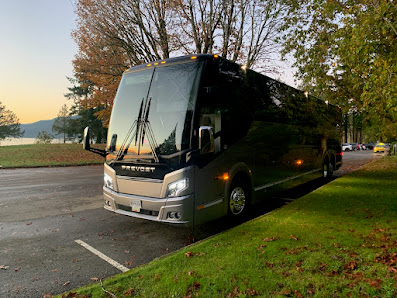
You won't need designated drivers, and the party starts the moment you board. This is where Star Coach steps in, redefining bus rental in the city with its luxury Prevost H3-45 coaches. You're not stuck with a one-size-fits-all solution. That's why we offer options ranging from basic transportation services to comprehensive travel packages that include guided tours and scheduled stops at Vancouver's must-see attractions.
That's exactly where Star Coach shines. Whether it's for corporate, family, or leisure travel, it's clear that Star Coach goes above and beyond to ensure a luxurious and seamless experience for all its passengers. Birthday parties, anniversaries, or even a day out with a large group of friends become extraordinary experiences with our service. Read more about Corporate Coach Rental Vancouver here First, the Prevost H3-45 boasts an Electronic Stability Program (ESP), significantly reducing the risk of skidding or loss of control in slippery conditions.
Highly trained and knowledgeable about the best routes in and around Vancouver, they ensure your journey is safe, comfortable, and on time. With Star Coach, you're not limited to standard routes. Corporate bus rental Each bus in their fleet isn't just a means of transportation; it's a statement of elegance and sophistication. Here, comfort meets luxury, transforming every journey into a memorable part of your Vancouver adventure.


And let's not overlook the importance of safety-Star Coach buses are equipped with the latest in safety technology, ensuring peace of mind from start to finish. You're in the right place if you're looking for a seamless, stress-free way to manage your travel needs.
From the moment you reach out to us, we're listening to what you want and need, ensuring that every detail of your trip is personalized just for you. With Star Coach, you'll access a diverse fleet that caters to any group size and a personalized approach ensuring your journey is exactly how you envision it.


A charter is the grant of authority or rights, stating that the granter formally recognizes the prerogative of the recipient to exercise the rights specified. It is implicit that the granter retains superiority (or sovereignty), and that the recipient admits a limited (or inferior) status within the relationship, and it is within that sense that charters were historically granted, and it is that sense which is retained in modern usage of the term. In early medieval Britain, charters transferred land from donors to recipients.
The word entered the English language from the Old French charte, via Latin charta, and ultimately from Greek χάρτης (khartes, meaning "layer of papyrus"). It has come to be synonymous with a document that sets out a grant of rights or privileges.
The term is used for a special case (or as an exception) of an institutional charter. A charter school, for example, is one that has different rules, regulations, and statutes from a state school.
Charter can be used as a synonym for "hire" or "lease", as in the "charter" of a bus, boat or plane.[1]
A charter member (US English) of an organization is an original member; that is, one who became a member when the organization received its charter.[2] A chartered member (British English) is a member who holds an individual chartered designation authorized under that organization's royal charter.[3][4]
Anglo-Saxon charters (also called diplomas) are documents drawn up between the seventh century and 1066 in Britain, which typically make a grant of land or record a privilege. They are usually written on parchment, in Latin. Around 200 survive in their original form, and many of the others have been altered or forged. The oldest surviving charters granted land and privileges to the church, but from the 8th century surviving charters were increasingly used to grant land to lay people.[5]
The British Empire used three main types of colonies as it sought to expand its territory to distant parts of the earth. These three types were royal colonies, proprietary colonies, and corporate colonies. A charter colony by definition is a "colony chartered to an individual, trading company, etc., by the British crown."[6] Although charter colonies were not the most prevalent of the three types of colonies in the British Empire, they were by no means insignificant.
A Congressional charter is a law passed by the United States Congress that states the mission, authority, and activities of a group. Congress issued federal charters from 1791 until 1992 under Title 36 of the United States Code.
A corporate charter is a document or charter that establishes the existence of a corporation in the United States and Canada.
A charter of "Inspeximus" (Latin, literally "We have inspected") is frequently a royal charter, by which an earlier charter or series of charters relating to a particular foundation (such as a monastery or a guild) was recited and incorporated into a new charter, usually in order to confirm and renew its validity under present authority. Where the original documents are lost, an inspeximus charter may sometimes preserve their texts and lists of witnesses.

A municipal corporation is the legal term for a local governing body, including (but not necessarily limited to) cities, counties, towns, townships, charter townships, villages, and boroughs. Municipal incorporation occurs when such municipalities become self-governing entities under the laws of the state or province in which they are located. Often, this event is marked by the award or declaration of a municipal charter, a term used because municipal power was historically granted by the sovereign, by royal charter.
Charters may establish or govern the operation of chivalric orders and other orders, such as the Sovereign Military Order of Malta.
In project management, a project charter (sometimes called the terms of reference) is provided by the sponsor to formally authorize the existence of a project. It provides a preliminary delineation of roles and responsibilities, outlines the project purpose and objectives, identifies key stakeholders, and defines the authority of the project manager. It serves as a reference of authority for future planning of the project. The project scope is developed from the project charter.
A royal charter is a formal grant issued by a monarch under royal prerogative as letters patent. Historically, they have been used to promulgate public laws, the most famous example being the English Magna Carta (great charter) of 1215, but since the 14th century have only been used in place of private acts to grant a right or power to an individual or a body corporate.[7][8][9] They were, and are still, used to establish significant organisations such as boroughs (with municipal charters), universities and learned societies, and were used historically to establish companies.
The Charter of 1814, France's constitution during the Bourbon Restoration, was thus called to promote the legal fiction that the King had granted it "voluntarily, and by the free exercise of [his] royal authority", in the manner of medieval charters.
At one time a royal charter was the only way in which an incorporated body could be formed, but other means (such as the registration process for limited companies) are generally now used instead.
A university charter is a charter issued to create or recognise a university. The form of charter used varies by period and jurisdiction.[10]
In the context of a political uprising, a charter might lay out the basic principles and goals of the movement, define the organizational structure of the movement, and describe the roles and responsibilities of its members.[11]
A charter is the grant of authority or rights, stating that the granter formally recognizes the prerogative of the recipient to exercise the rights specified. It is implicit that the granter retains superiority (or sovereignty), and that the recipient admits a limited (or inferior) status within the relationship, and it is within that sense that charters were historically granted, and it is that sense which is retained in modern usage of the term. In early medieval Britain, charters transferred land from donors to recipients.
The word entered the English language from the Old French charte, via Latin charta, and ultimately from Greek χάρτης (khartes, meaning "layer of papyrus"). It has come to be synonymous with a document that sets out a grant of rights or privileges.
The term is used for a special case (or as an exception) of an institutional charter. A charter school, for example, is one that has different rules, regulations, and statutes from a state school.
Charter can be used as a synonym for "hire" or "lease", as in the "charter" of a bus, boat or plane.[1]
A charter member (US English) of an organization is an original member; that is, one who became a member when the organization received its charter.[2] A chartered member (British English) is a member who holds an individual chartered designation authorized under that organization's royal charter.[3][4]
Anglo-Saxon charters (also called diplomas) are documents drawn up between the seventh century and 1066 in Britain, which typically make a grant of land or record a privilege. They are usually written on parchment, in Latin. Around 200 survive in their original form, and many of the others have been altered or forged. The oldest surviving charters granted land and privileges to the church, but from the 8th century surviving charters were increasingly used to grant land to lay people.[5]
The British Empire used three main types of colonies as it sought to expand its territory to distant parts of the earth. These three types were royal colonies, proprietary colonies, and corporate colonies. A charter colony by definition is a "colony chartered to an individual, trading company, etc., by the British crown."[6] Although charter colonies were not the most prevalent of the three types of colonies in the British Empire, they were by no means insignificant.
A Congressional charter is a law passed by the United States Congress that states the mission, authority, and activities of a group. Congress issued federal charters from 1791 until 1992 under Title 36 of the United States Code.
A corporate charter is a document or charter that establishes the existence of a corporation in the United States and Canada.
A charter of "Inspeximus" (Latin, literally "We have inspected") is frequently a royal charter, by which an earlier charter or series of charters relating to a particular foundation (such as a monastery or a guild) was recited and incorporated into a new charter, usually in order to confirm and renew its validity under present authority. Where the original documents are lost, an inspeximus charter may sometimes preserve their texts and lists of witnesses.
A municipal corporation is the legal term for a local governing body, including (but not necessarily limited to) cities, counties, towns, townships, charter townships, villages, and boroughs. Municipal incorporation occurs when such municipalities become self-governing entities under the laws of the state or province in which they are located. Often, this event is marked by the award or declaration of a municipal charter, a term used because municipal power was historically granted by the sovereign, by royal charter.
Charters may establish or govern the operation of chivalric orders and other orders, such as the Sovereign Military Order of Malta.
In project management, a project charter (sometimes called the terms of reference) is provided by the sponsor to formally authorize the existence of a project. It provides a preliminary delineation of roles and responsibilities, outlines the project purpose and objectives, identifies key stakeholders, and defines the authority of the project manager. It serves as a reference of authority for future planning of the project. The project scope is developed from the project charter.
A royal charter is a formal grant issued by a monarch under royal prerogative as letters patent. Historically, they have been used to promulgate public laws, the most famous example being the English Magna Carta (great charter) of 1215, but since the 14th century have only been used in place of private acts to grant a right or power to an individual or a body corporate.[7][8][9] They were, and are still, used to establish significant organisations such as boroughs (with municipal charters), universities and learned societies, and were used historically to establish companies.
The Charter of 1814, France's constitution during the Bourbon Restoration, was thus called to promote the legal fiction that the King had granted it "voluntarily, and by the free exercise of [his] royal authority", in the manner of medieval charters.
At one time a royal charter was the only way in which an incorporated body could be formed, but other means (such as the registration process for limited companies) are generally now used instead.
A university charter is a charter issued to create or recognise a university. The form of charter used varies by period and jurisdiction.[10]
In the context of a political uprising, a charter might lay out the basic principles and goals of the movement, define the organizational structure of the movement, and describe the roles and responsibilities of its members.[11]
Can Star Coach Accommodate Last-Minute Booking Requests, and if So, How Does It Impact Pricing and Availability?
Yes, you can place last-minute booking requests, but it might affect pricing and availability. Expect to pay a premium for the convenience, and there's a chance your preferred options may not be available.
Can Star Coach Accommodate Passengers With Special Dietary Needs for Meals Provided During the Travel?
Yes, Star Coach can accommodate your special dietary needs for meals during travel. You'll just need to let them know in advance, and they'll ensure your dietary restrictions are taken care of.
Can Passengers Request Specific Drivers for Their Trips Based on Previous Experiences?
Yes, you can request specific drivers for your trips based on previous experiences. This personalized approach ensures you're comfortable and satisfied with your journey, making your travel experience even more enjoyable and tailored to your preferences.


